
The objective
Automating the construction process end to end: from the survey of what exists to a building that keeps reporting its own data.
Six stages. Today each one needs someone to redraw, re-enter or re-measure what the stage before it already produced. Our research sits on those joints.
- 01
Scan
Surveying the building as it stands, by drone or on the ground.
Automated point-cloud survey - 02
Computational design
Generated from the survey, with each party's contribution attributed on a shared ledger.
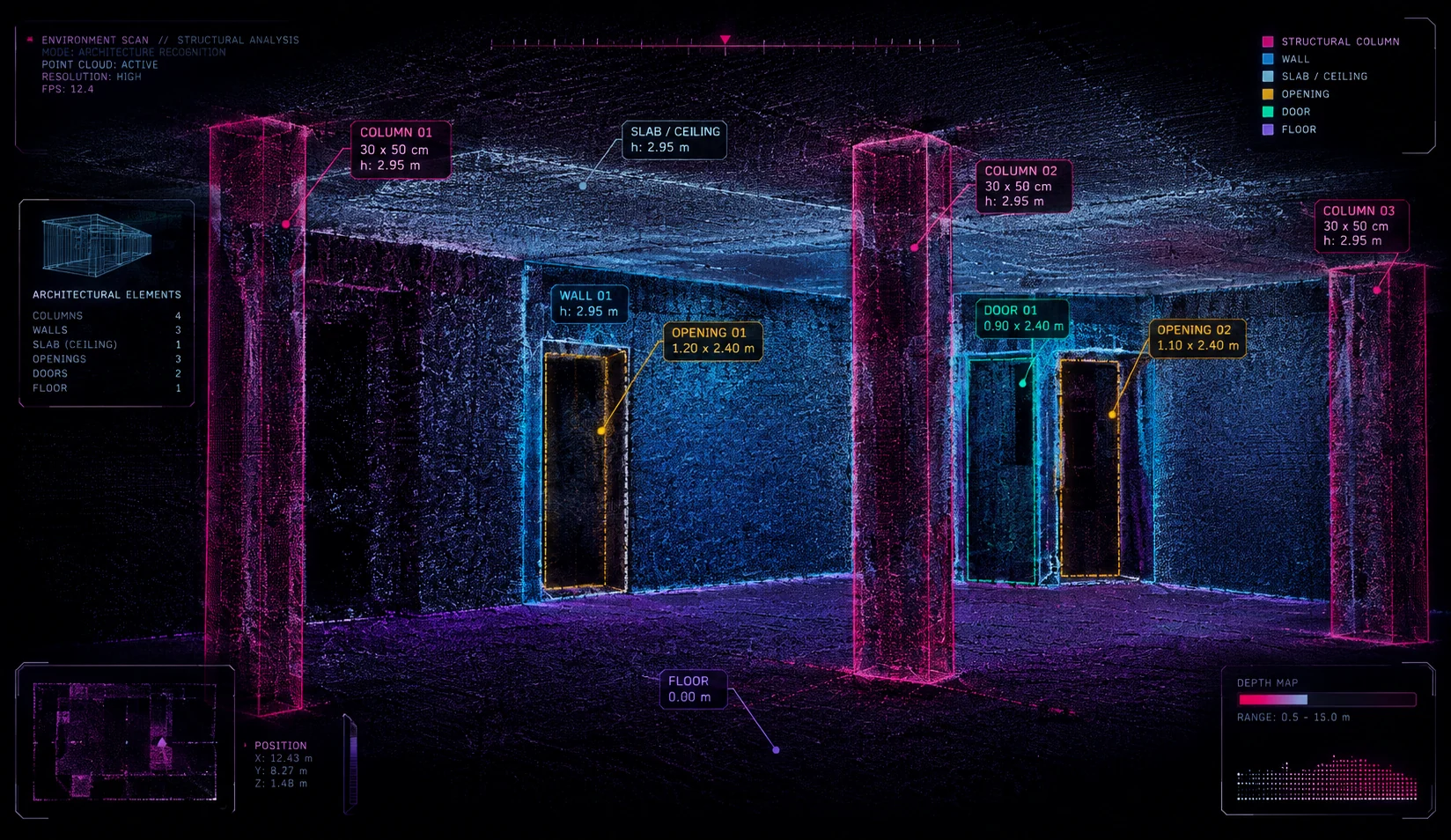 BIM / Computational designThe workflow recognises the building elements automatically: columns, walls, slab, openings, doors.
 - 03
Robot instructions
The design compiled into code the controller executes.
Code / machineThe toolpath generated in the model becomes a program the controller runs. - 04
Construction
The machine builds on site and adapts to what it finds.
Design / builtThe geometry goes from the drawing to the structure as it stands. - 05
Site control
Progress and deviation measured continuously, not as a separate campaign.
- 06
Connected building
After handover it keeps reporting its data, and the model keeps up.
News from research
Full collection →We follow the main journals and preprint archives in the field — Automation in Construction, Construction Robotics, Advanced Engineering Informatics, ISPRS, arXiv — and keep what moves one of the six stages.
Registering a laser scan against a city model that declares its own uncertainty improves the fit exactly where the model is weakest.
Xu, Schwab, Yang, Kolbe, Holst · arXiv, 2025
ModelA construction robot corrects its own position by reading the building model. Alignment error down 64 to 88 per cent.
Akhavian, Amani, Mootz, Ashe, Beheshti · arXiv, 2025
Robotic constructionA robot takes the toolpath from the model, adapts it to the wall as found on site, and writes the deviation back into the model.
Wang, Yu, McGee, Menassa, Kamat · arXiv, 2023
Built
All projects →
BRIX
A 650 kg autonomous rover with a collaborative arm, laying brick walls on an open site. Full-scale demonstrator at SAIE 2023.
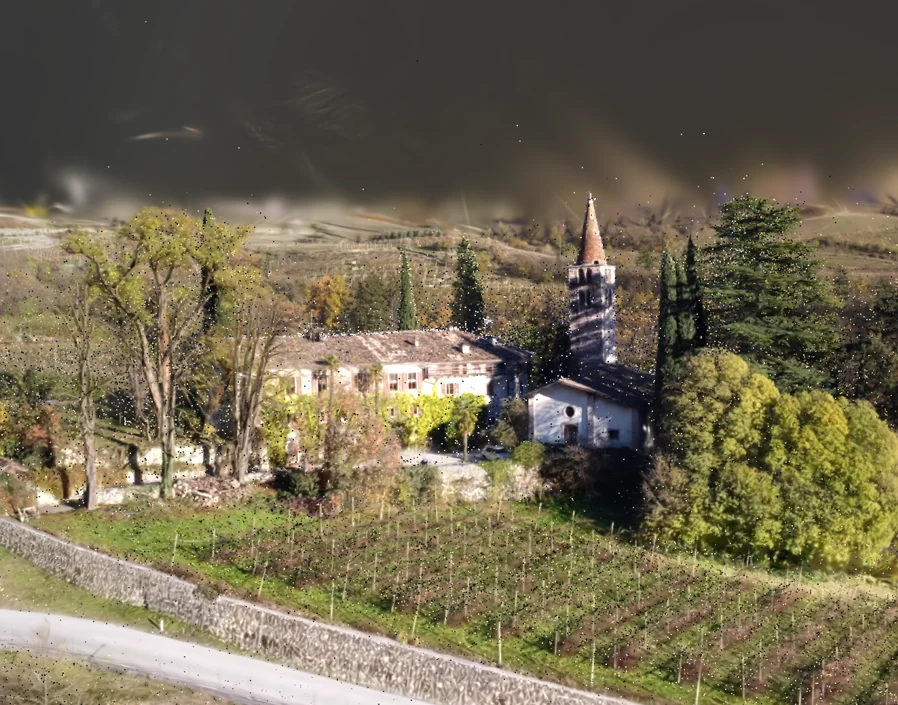
Gaussian splatting survey
A settlement flown by drone and reconstructed as a splatting model, then used as the base for participatory design.
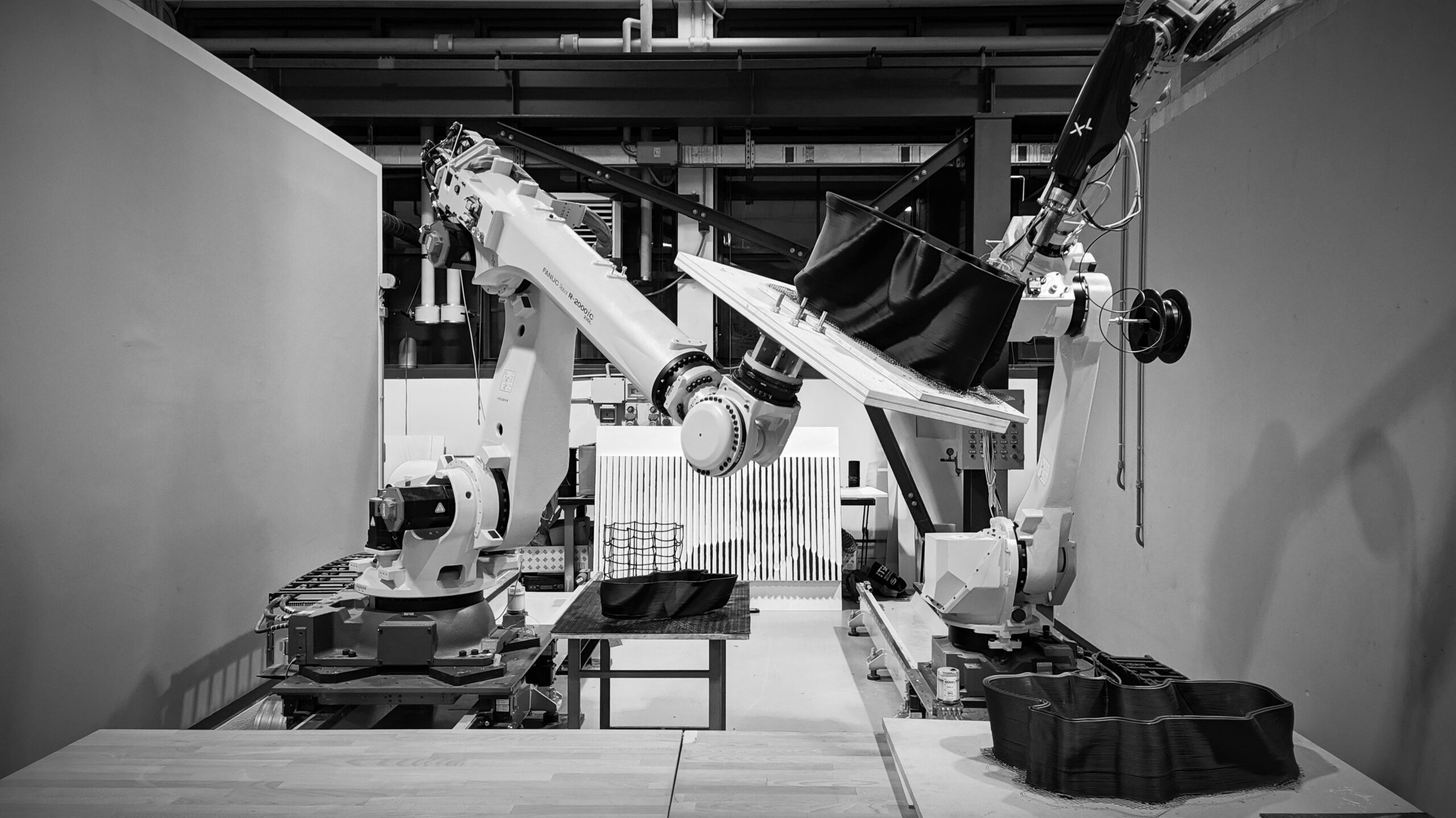
Fanuc cell
Two arms on rails under one controller, driven from Rhino and Grasshopper through our fork of the post-processor.
Publications
A 650 kg rover lays brick walls on an open site instead of inside a structured cell. The measured gain is in occupational safety; cost and market policy stay open.
BRIX: an autonomous system for brick wall construction · Construction Robotics 8, 2024
Drone photogrammetry and Gaussian splatting run on the same village, compared on one question: which survives the passage into an interactive environment, and at what cost.
Implementing immersive worlds for metaverse-based participatory design · ISPRS IJGI 13(6), 2024
Abandoned settlements turned into models a community can act on, with renovation options generated from the survey rather than redrawn from it.
Metamorphosis: transforming communities through photogrammetry and metaverse · ISPRS Archives, 2024
What resilience can mean once the model is part of the system being modelled.
Resilience and the Metaverse: a toolkit approach · Springer, 2024
Agents running inside Grasshopper that lower what a practice has to know before it can use computational design at all.
Expanding access to computational design · Book chapter, 2025
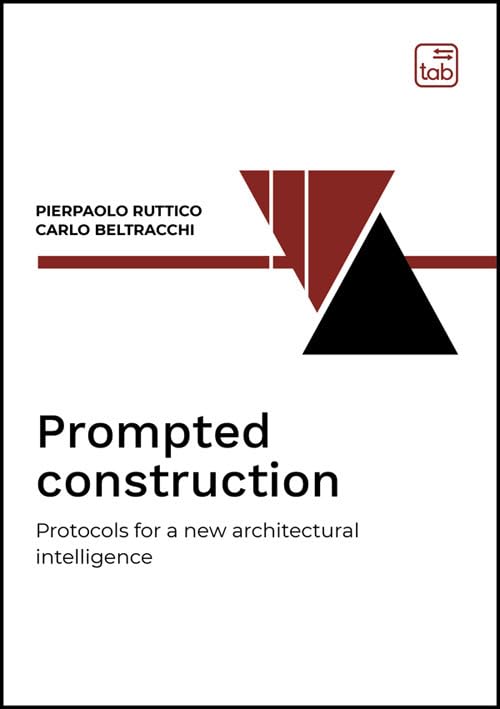
Book
If you have read this far, this is probably for you.
Prompted Construction · Tab edizioni, 2025 (EN) and 2026 (IT)
If artificial intelligence can design, build and monitor, what is left for the architect? The book treats design as an ecosystem of data and automated decisions, and argues that the prompt is now the interface through which it is directed.
With Pierpaolo Ruttico and Andrea Dari. Tab edizioni, June 2025. ISBN 979-12-5669-161-6.